Thu 18.02.27 —
Sat 27.02.27
Sonder
Yves Degryse & Alva Ishii / BERLIN & ntgent
NL
EN
Theatre makers Luanda Casella, Yves Degryse, and Julian Hetzel sit down with dramaturg Kaatje De Geest to discuss what truth means in their work and what principles guide them as artists.

More than perhaps any other art form, theatre has always been knee-deep in the swamp that is fiction and reality. Since ‘post-truth’ became the Oxford English Dictionary’s word of the year in 2016, we have grown accustomed to world leaders spreading blatant lies, tech leaders avoiding moral consequences, and other business and policy makers bending the facts to suit their own market. How can theatre reclaim this space of obscurity between the real and the fictional, the truthful and the deceptive? Theatre makers Luanda Casella, Yves Degryse and Julian Hetzel share their thoughts with dramaturg Kaatje De Geest on what their truths are.
Visit Luanda Casella’s website, and you are greeted by two short, intriguing words: 'Trust me'.
“I actually just got a gig because of that,” she laughs. The words are a nod to her long-standing research subject of the unreliable narrator. “It’s a technique they use. They say: ‘You can trust me. I’m not going to lie.’ But at the same time, they also give you signs that they are lying.” Casella continues: “The unreliable narrator might be a trope we know from classic literary works, but nowadays, corrupt politicians, fake neuroscientists, fraudulent investors, media manipu-
lators and spin doctors have appropriated the literary technique in everyday life. Except in literature, it is a technique of criticism. In fiction, there is a distance between author and narrator — the author winks at the reader behind the narrator’s back. In real life, you don't have this distance. The narrator and the mani-
pulator are the same person.”
What to make, then, of the work of these three theatre makers, none of them strangers to the idea of deceiving their audiences?
According to Yves Degryse, it’s a relief for the audience to come into this space designed specifically for games of make-believe. “Here, you’re allowed to not be trusting. It’s an agreement we make: you buy a ticket, the curtain goes up, we pretend and the curtain closes again, that's the basic idea of it. It's becoming a place to defend as an idea.”
Julian Hetzel also likes to spend time in this zone of ambiguity: “Do we even need to know if what I am being told is true, or not, if it's real or fake? The theatre is a very productive place to question the fact-checking tendency that we have in our daily life. As artists we need to re-appropriate this space of the post-factual, and not leave it to the populist politicians around the world.”

Powers are shifting, fascism is given full rein,... I feel an intrinsic motivation to use my privilege and my means to fight for a different future
Even though the post-truth era has perhaps meddled with the audience’s willingness to suspend their disbelief, the theatre makers agree that it is a good idea to know the ropes of these techniques of deception and not shy away from them in theatre, on the contrary.
Hetzel sees himself as a trickster, and his art as a Trojan horse: “Powers are shifting, fascism is given full rein, and I feel that I have an intrinsic motivation to use my privilege and my means to fight for a different future. Theatre or art in general is capable of subverting the existing power structures by using their formats or aesthetic strategies. It’s good to not always take ourselves and what we show on stage too seriously either, to look through the lens of humour more often. Irony and satire have always been tools of the artist, the clown, to question the establishment. I think, to exercise dissent, the three of us are all exploring the possibility to speculate in our work, to go beyond what is accepted.”
Degryse adds that the lie can often be the start of critical thinking. “It’s what they do to us as kids, with Sinterklaas. It’s the first time you think: ‘Well, this whole system of presents, toy stores and all those grown-ups who are in on it … It’s all done for a lie.’ That was the moment where I started to question all these other things that I took for granted. Starting with the church, religion, … A well-known child psychiatrist even told me to keep up this act for my own children, that it was crucial for their upbringing to discover that their parents are lying about this whole idea.”
Casella shakes her head with a smile: “I have a completely different opinion. Sinterklaas is not welcome anywhere near our house. But I do like to create lies elsewhere. Like the Easter Bunny, I told my children that it’s a female rabbit, even though in Portuguese everyone refers to it as masculine.”

A well-known child psychiatrist once told me it's crucial for children to discover that even their parents are sometimes lying. A lie can be the beginning of critical thinking
Aside from the incessant sensation of being lied to, be it in the news or in theatre, current times are also forcing us to apply ourselves to the question of whether something is real or not. In times where AI is flooding the internet with slop, deep-fakes, and novels and albums by fictitious authors and bands, is there a duty for the (performing) arts to step in and defend the authentic?
Hetzel swears by the real in his practice. His performances use reality as raw material: actual rubble imported from Syria, human fat sourced from liposuction clinics, a genuine couple performing as themselves on stage. The insistence on the real is not a fetish but a motor: “The research to find real material brings me in contact with plastic surgeons, with people that work in conflict zones. It complicates the whole process in a good way, these obstacles embody the content of the plays I create. It’s also this idea of the ready-made, to bring something that is not art into an artistic context, and thus shifting the quality and the meaning.”
In his new production Ctrl+C, he takes a closer look at this fascination with the authentic in Western canon: “What happens if I undermine my own original art work, by outsourcing the core function that I actually have, meaning the creation of the work? What if I delegate this part to someone else, and what if the copy then precedes the original somehow?”
But Ctrl+C is about a lot more than dissecting an artwork’s aura. It will look at the underlying systems of the old Western hegemony, now being outrun by copies in the Global South. Hetzel explains: “I believe that a lot of the values that we hold in Europe need to be fundamentally questioned in order to find new forms. So for me, to commission a work from an artist in China, it’s a gesture to kind of trip myself up, to loose my footing, in order to parallel the fact that the idea of Western moral authority or cultural superiority we have been clinging to in Europe, is untenable.”
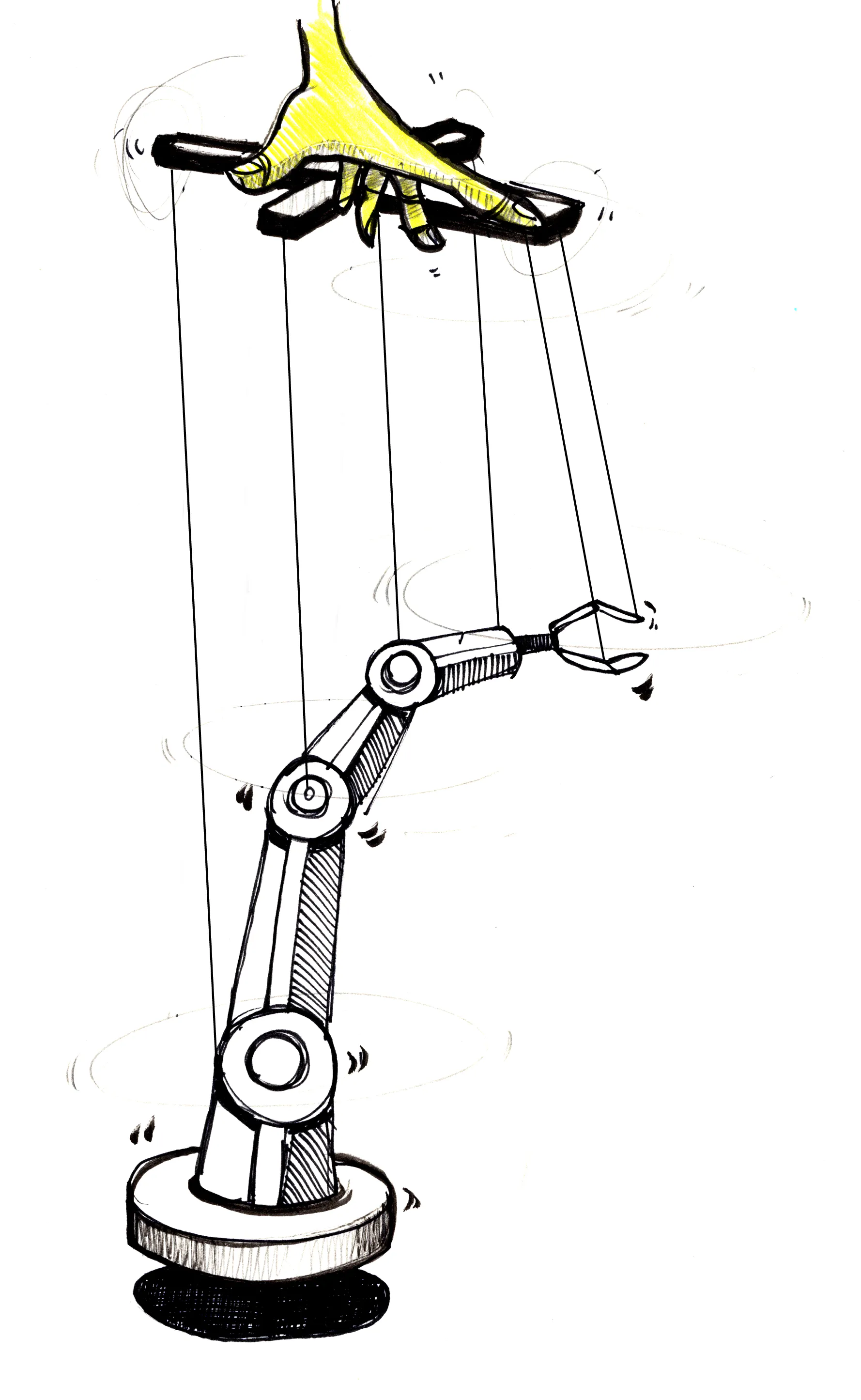

The real and the unreal can also exist side by side, as we’ll see in BERLIN’s new production Sonder. In the piece, a widower appears on stage and speaks with his deceased wife. Her voice is generated by Alva Ishii, NTGent’s digital house artist. During the creation process, Alva is being trained on the mother’s data: photographs, videos, hospital records, and voice recordings, enabling her to respond with uncanny precision — not simply imitating the timbre of the voice, but approximating the emotional logic of a long marriage, even taking into account the current physiological metrics of the husband, like his heart rate, blood pressure and brain waves. Degryse ponders: “I think the realness of it all depends on the point of view. For the widower, and his daughter Kaat, the absence is real. Yet the situation is not real, in the sense that they will converse with Alva Ishii, so it’s a set-up conversation. AI offers a language model, not actual language.”
These conversations is something that fascinates Degryse: “With everything that is going on the past years, outside of this space of imagination, it has become less interesting for me to focus on this fiction-nonfiction dichotomy, and instead dive deep into what it means to encounter someone. What is a real encounter, between us, here and now? It’s compelling to contrast this with AI and the potential it offers to challenge death. To say: no, stay here. It’s the story of Orpheus and Eurydice in our own time. With all these technological possibilities, it's already perfectly possible to postpone the ultimate absence, but at what moment do you then finally decide: Okay, I am going to look over my shoulder, turn around and let you go?”
I try to put myself in the scene as an unreliable person, in order to look into parts of me that I want to heal — insomnia, disillusion with reality, anger
In this tangle of truth and fabrication, new technology and real encounters, Casella finds encouragement in the idea of shifting the focus away from the self, the artist, and implying the audience: “I try to put myself in the scene as an unreliable person, in order to look into parts of me that I want to heal — insomnia, disillusion with reality, anger. And in Trouble Score there is the idea that we create deceptive discourses towards ourselves, in order to cope with trauma. But by looking at this self-deception, if you're committed to growth, maybe you’ll heal. I read in Naomi Klein’s book Doppelganger that we are constantly doubling ourselves, doubling, doubling, doubling, … It made me think: What if we un-self ourselves? We are artists, we make work that is personal to us, but deep down, it’s not about us. I am putting what I really believe for the world into my work, but it’s not about me.”
In a time when collective truth feels fractured, these micro‑moments of shared understanding may be the closest we get to common certainty. Perhaps the stage then does not need to defend truth against deception, nor authenticity against artifice. Instead, it can reassert itself as the one place where we rehearse our relationship to the untrustworthy.